
The work behind the game
From the outside, a match can look simple.
Players arrive. Coaches prepare the team. The game starts. Parents watch from the sideline.
But behind every game is a much bigger operation. Someone has organised the team. Someone has communicated the details. Someone has checked availability. Someone has prepared training. Someone is keeping track of players, attendance and what needs to happen next.
A fun season is shaped by thousands of these small decisions.
And when information is difficult to find, duplicated across different places or communicated too late, those small problems quickly become someone's big problem.
That is one of the things we've learned from paying attention to the work that happens behind the game.
The best systems reduce thinking
Club administrators, coaches and volunteers already have enough to think about.
They shouldn't have to remember where the latest information lives, work out which version of a document is correct or reconstruct a player's history before they can make a simple decision.
The most useful systems reduce that uncertainty.
They put the right information in the right place and make the next action obvious.
That's one of the principles behind ClubSort.
Whether someone is checking an Event, reviewing a Team, preparing a Plan or looking at a player's development, the system should help them understand what matters without making them search for the answer.
Good software shouldn't make people think about the software. It should help them think about the work.
Context matters
A piece of information is rarely useful on its own. Knowing that a player missed an event is one thing.b Knowing which team they belong to, whether they were expected to attend, how regularly they have participated and what else is happening around them provides much more useful context.
The same is true for coaching.
A training Plan becomes more useful when it connects to the team, the players and the development objectives behind the session.
A Review becomes more meaningful when it sits alongside the player's broader development rather than existing as an isolated form.
The lesson is simple: don't just store information; connect it to the decisions people need to make.
Shared information needs to stay shared
Community sport involves a lot of people.
Coaches, managers, directors, players, parents and volunteers can all need different parts of the same information.
That makes keeping everyone aligned surprisingly difficult.
A change to an event can affect a coach's plans. A change to a team can affect player availability. A new assessment can influence what a coach focuses on during training.
When information is scattered across messages, spreadsheets and different systems, it becomes difficult to know what is current.
A shared platform gives everyone a common reference point.
That doesn't mean everyone needs access to everything.
It means the people who need information should be able to find the same current version of it.
Administration should support people, not compete with them
One of the clearest lessons from community sport is that most people aren't there because they love administration; they're there because they love the sport:
- Coaches want to coach.
- Players want to play.
- Parents want to support their children.
- Volunteers want to contribute.
That doesn't make administration unimportant. Quite the opposite.
Good administration creates the conditions that allow everyone else to do their part.
Features such as attendance, game tracking, team management and event organisation aren't valuable simply because they digitise a process.
They're valuable when they remove repetitive work and give people more time and attention for the things that matter.
Flexibility matters more than we expected
No two clubs operate exactly the same way.
Different sports have different rules. Different age groups have different requirements. Different clubs have different structures and different ways of working.
Even within one club, a junior development team can operate very differently from a senior competition team. That means software designed around one rigid workflow will eventually get in the way.
ClubSort's approach has been to build flexible foundations, things like configurable Age Groups, Phases, teams, match formats and development structures, so clubs can adapt the system to the way they actually operate.
The goal isn't to tell clubs how to run themselves, It's to give them tools that fit the way they already work.
The details add up
Perhaps the biggest lesson is that the small things aren't actually small:
- A clearer event.
- A better training plan.
- A simpler way to manage a team.
- A player profile that brings the important information together.
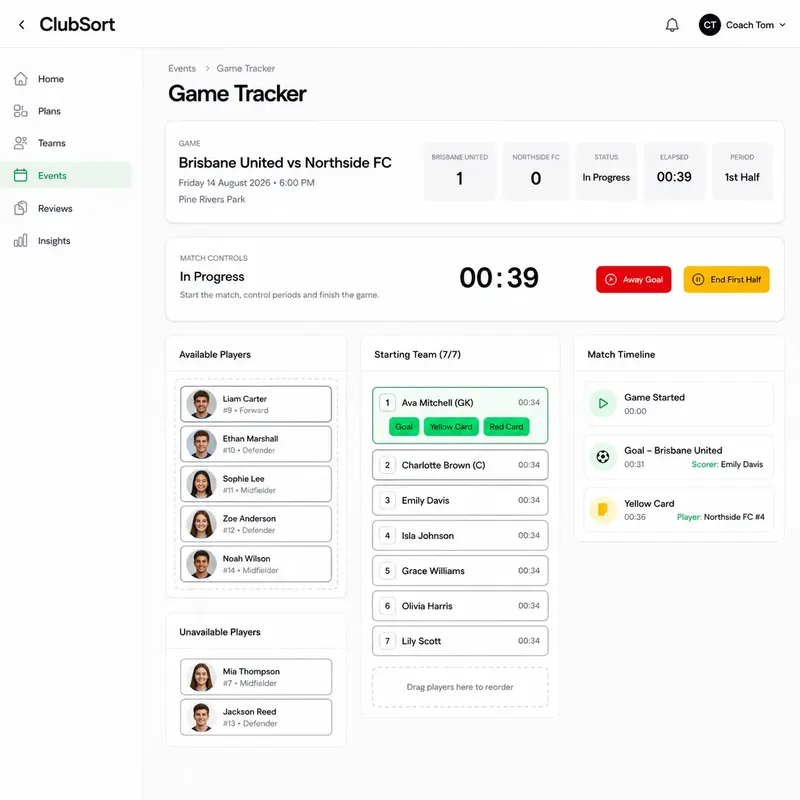
- A game tracker that removes paperwork during a match.
- A review that gives a coach a better conversation with a player.
Each improvement might seem modest on its own. Together, they change the experience of running a club.
Community sport works because thousands of people do small things that matter. The right tools should make those things easier.
What we're carrying forward
The best product ideas don't come from sitting in a room and deciding what clubs should need. They come from listening carefully to the people actually doing the work.
Coaches know where training becomes difficult, Managers know where administration gets repetitive, Directors see where information gets lost, Players and families experience the results of those decisions every week.
Those perspectives shape what we build. As ClubSort continues to evolve, we're carrying forward a simple idea:
Technology should make community sport easier to organise, not more complicated.
There will always be more to improve, more to learn and more ways clubs can work differently. And that's exactly what makes building for community sport so interesting and fun.