ClubSort Help

Seasons

Seasons organise the Teams, Events, Review Periods and Reviews that belong to a particular period of Club activity. Use a Season to keep records together across years, competitions or other Club cycles.

Understand active and archived Seasons

An Active Season is available for current Club operations. An Archived Season keeps its historical records available for reference but is closed to new operational changes.

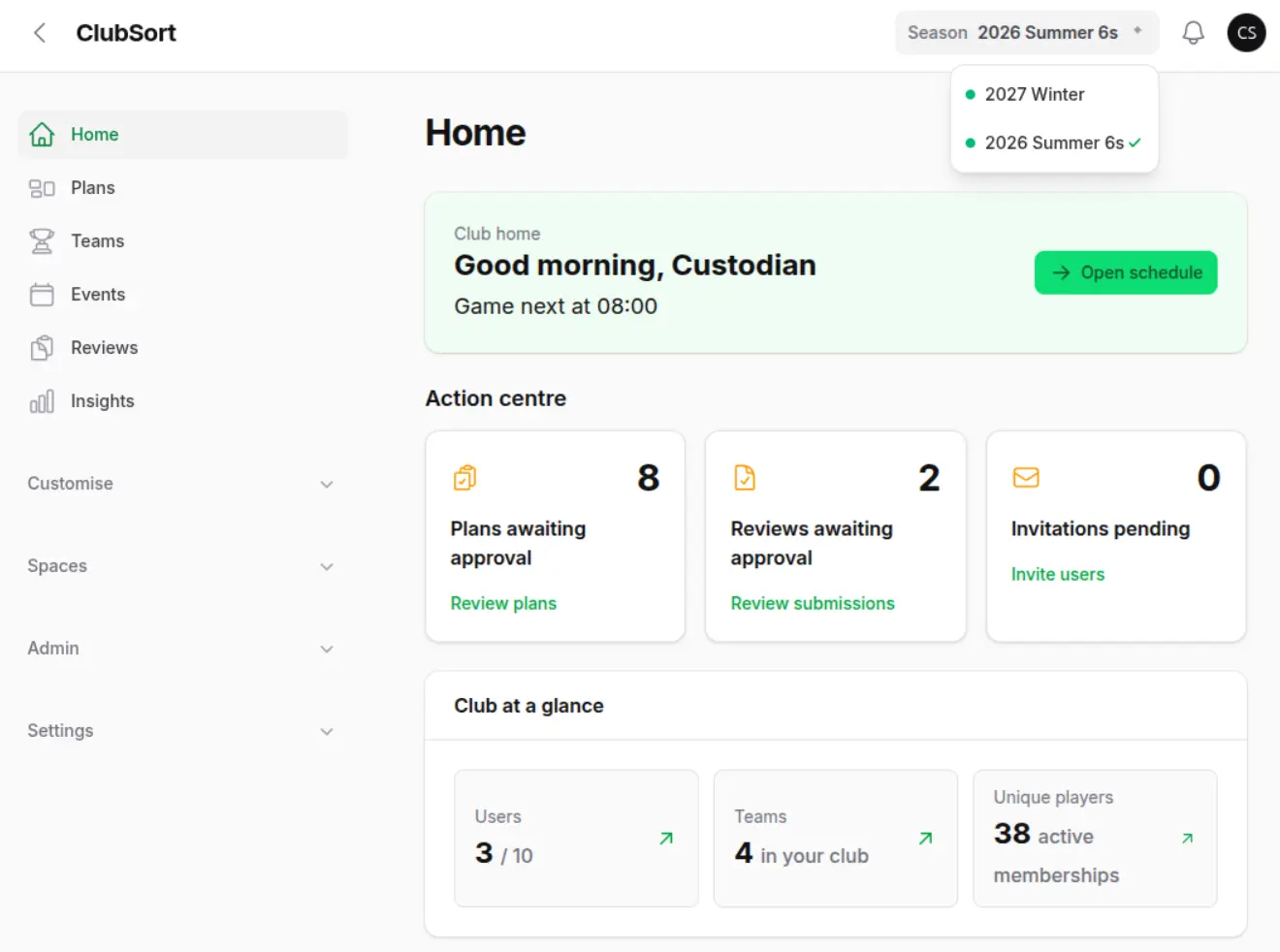
Active Seasons are marked with a green status dot in the Season selector. Archived Seasons appear in italic, muted text. The selected Season is shown in the top navigation and controls which seasonal records you see.

When no Season has been selected for the current Profile, ClubSort selects the most recent Active Season. If there is no Active Season, it selects the most recent available Season.

Create a Season

Screenshot

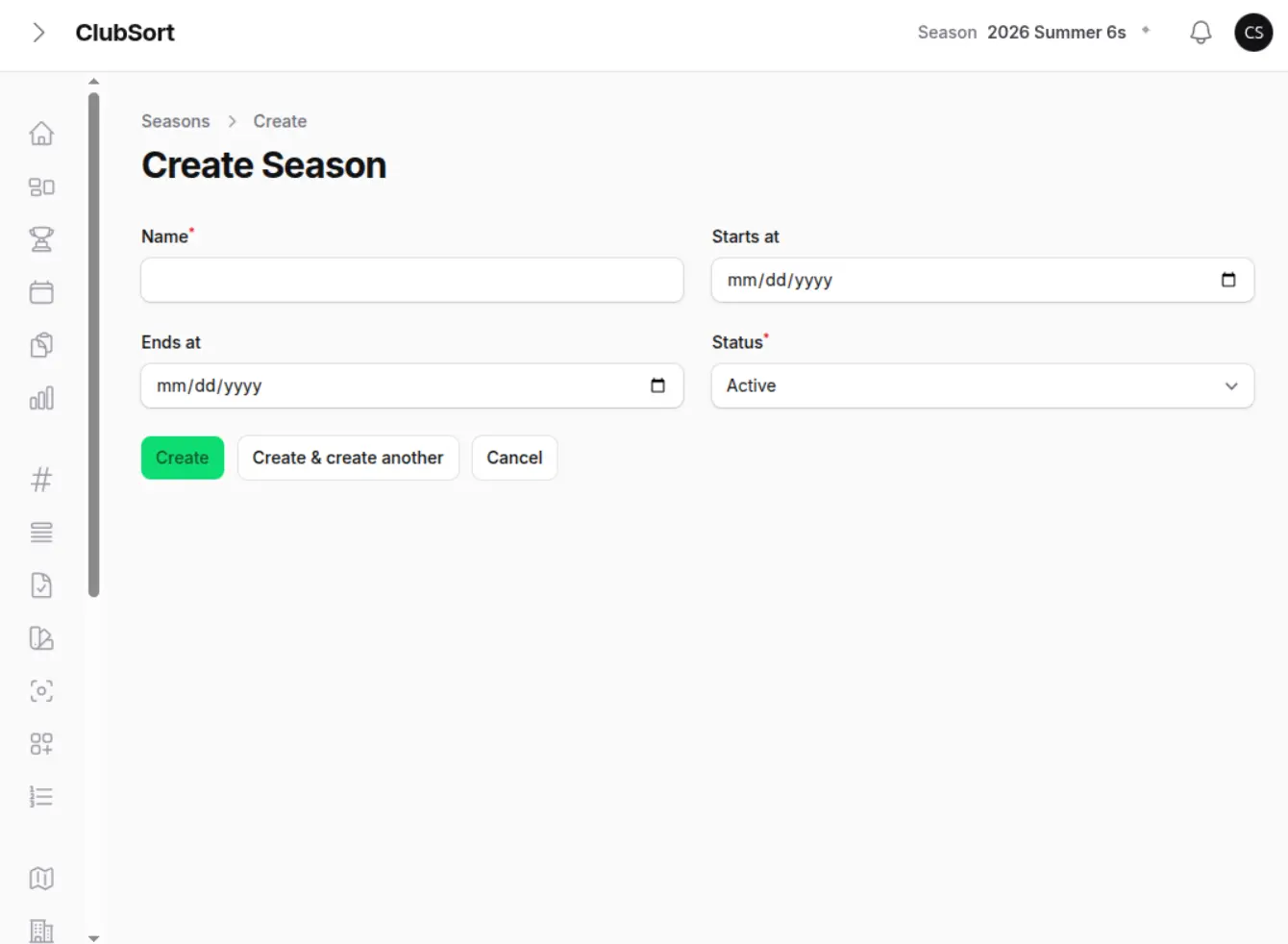
Create Season form

Create Season form

Show: Season name, date range and Active status fields.

Purpose: Show the minimum information needed to create a usable Season.

Who can do this?

Custodians and Directors with permission to manage the Club.

Before you start

Decide the Season name, start date and end date. Create a new Season before setting up its Teams, Events or Review Periods. Your Club must be writable.

How to do it

  1. Open Seasons from the ClubSort navigation.
  2. Select Create Season.
  3. Enter a clear Season name, such as `2027` or `2027 Winter Competition`.
  4. Set the start and end dates when they are known.
  5. Save the Season.
  6. Select the new Season from the Season selector before creating its Teams, Events or Review Periods.
  7. Confirm that the Season is Active while the Club is setting up and running its activities.

A Season can be created without dates, but date ranges help with reporting and Insights. Add dates before relying on date-based Season filtering in Insights.

Roll over a Season

Season rollover creates a new Season from selected Teams and active Player Memberships while archiving the previous Season. The previous Season and its records remain available as history.

Who can do this?

Custodians can roll over a non-archived Season in a writable Club.

Before you start

Review the Teams and Players in the source Season. Decide which Teams and active Memberships should continue, and confirm the new Season title and date range. Team assignment and subscription limits still apply.

How to do it

  1. Open Seasons and choose Roll over next to the Season you want to finish.
  2. Confirm that you want to continue. ClubSort opens the rollover form; no changes are saved while you edit it.
  3. Enter the new Season title and dates. Dates can be left blank if they are not known yet.
  4. Review each Team. Teams are selected by default. Turn off Include this team in the new season to leave a Team in the archived Season.
  5. For each selected Team, update its proposed name or age group and choose its staff.
  6. Choose whether to roll over Player Memberships for that Team. Membership rollover is on by default, with active Memberships selected. You can clear individual Players or turn off membership rollover entirely.
  7. Submit the form when the Teams, staff and Players are correct.

When rollover succeeds, ClubSort archives the source Season, creates the new Season and selected Teams, and recreates the selected Player Memberships. A selected Team is still created when membership rollover is off or no Players are selected. Excluded Teams and Memberships stay in the archived Season. The new Season is selected for your active Profile.

Rollover links each new Membership to the Membership it came from. The Player Hub's Seasons count follows these links to show the player's rollover history.

If assignment or subscription limits prevent the rollover, ClubSort reports that it could not be completed and does not leave the source Season partially archived.

Select a Season

Screenshot

Season selector

Season selector

Show: The Season selector with Active and Archived Seasons distinguished.

Purpose: Make the selected seasonal context visible before creating records.

Who can do this?

Any user who can view the Season and its related Club records.

How to do it

  1. Open the Season selector in the top navigation.
  2. Choose the Season you want to work in.
  3. Use the Team, Event, Review or Insights area as usual.
  4. Switch back to the current Active Season when you are ready to resume operational work.

The selected Season is stored for your active Profile. Switching Profile can change the available Seasons and the selected Season for that Profile. Coaches and Managers may only see Seasons connected to Teams they can access.

The selector keeps archived Seasons available for historical reference. Their italic styling identifies them as closed rather than current.

Work in an archived Season

Archived Seasons are read-only for new operational changes. You can continue to view historical Teams, Events, players and Reviews that you are allowed to access, but the controls for creating new Teams, Events, Reviews or Players are hidden.

Do not create new records in an archived Season to represent current activity. Select an Active Season instead. If an historical record needs correction, ask a Custodian or Director to follow the Club's correction process.

Archiving a Season preserves its records and marks its Teams as archived. The Season remains available in the selector for reference.

Organise Review Periods by Season

Review Periods belong to a Season and provide the stages used to organise Reviews. Select the target Active Season before creating a Review Period.

A Season can contain periods such as `T1`, `T2`, `T3` and `T4`, or any other cycle structure that suits the Club. Reviews created in that Season use its available Review Periods, keeping player progress grouped with the correct historical cycle.

See What are Review Periods and Cycles? for examples.